
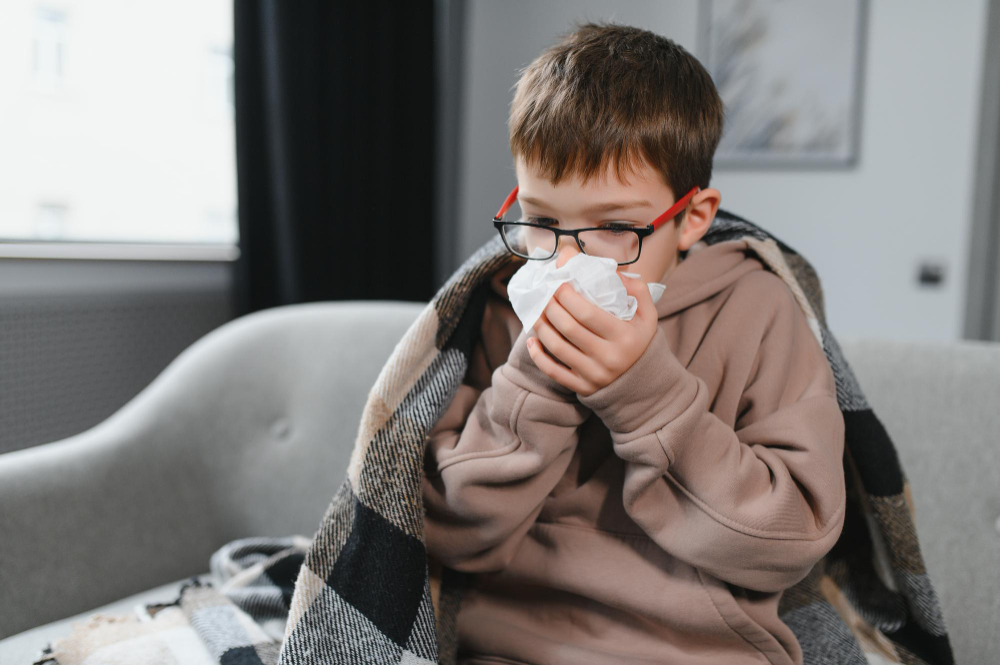
Winter cough & cold in children are very common during the colder months. Many parents notice their kids catching colds more often in winter. This happens because viruses spread more easily when people spend time indoors. Also, dry air can irritate a child’s nose and throat. Understanding winter cough & cold in children helps parents care for their kids and prevent illness.
Symptoms of Winter Cough & Cold in Children
Children may show different signs when they have a winter cough or cold. However, some symptoms are more common than others. Knowing these signs helps parents spot illness early.
Sometimes, children may also have mild headaches or body aches. But most winter coughs and colds in children are not serious. Still, watch for signs that may need a doctor’s care, like trouble breathing or a high fever.
Common Causes
Many viruses can cause winter cough & cold in children. The most common is the rhinovirus. However, other viruses like RSV (respiratory syncytial virus) and influenza can also lead to cough and cold symptoms. During the US winter season, children are indoors more, so germs spread easily. Dry indoor air can also dry out the nose and throat, making it easier for viruses to infect.
Because children touch their faces often, they can catch viruses quickly. Therefore, teaching good habits is important.
How Is It Diagnosed?
Doctors usually diagnose winter cough & cold in children by asking about symptoms and doing a simple check-up. Most of the time, no special tests are needed. However, if a child has a high fever, trouble breathing, or symptoms that last longer than 10 days, the doctor may check for other illnesses. Sometimes, tests for flu or strep throat are done if needed.
Usually, a careful look at the child’s nose, throat, and chest is enough. If symptoms are mild, home care is often all that is needed.
Treatment Options
Most winter coughs and colds in children get better on their own. However, there are ways to help your child feel better at home. Here are some child winter cold remedies and tips:
But, do not give cough or cold medicines to children under 6 years old unless your doctor says it is safe (CDC).
See a doctor if your child:
Doctors may suggest other treatments if they find a different illness, like the flu or an infection.
Prevention Tips for Parents
Preventing cough in kids during winter is possible with a few simple steps. These tips help lower the risk of pediatric winter illnesses:
These steps can help prevent many winter coughs and colds in children.
Lifestyle and Home Remedies
Besides medical care, home remedies can help your child feel better. For example, warm drinks like honey and lemon water (for children over 1 year) can soothe a sore throat. Also, raising your child’s head with an extra pillow may help with nighttime coughing. Keeping your home smoke-free is important, as smoke can make symptoms worse.
However, always check with your doctor before trying new remedies, especially for young children.
In summary, winter cough & cold in children are common but usually mild. With good care and prevention, most children recover quickly. Consult a pediatrician for personalized advice on managing your child’s winter cough and cold.